
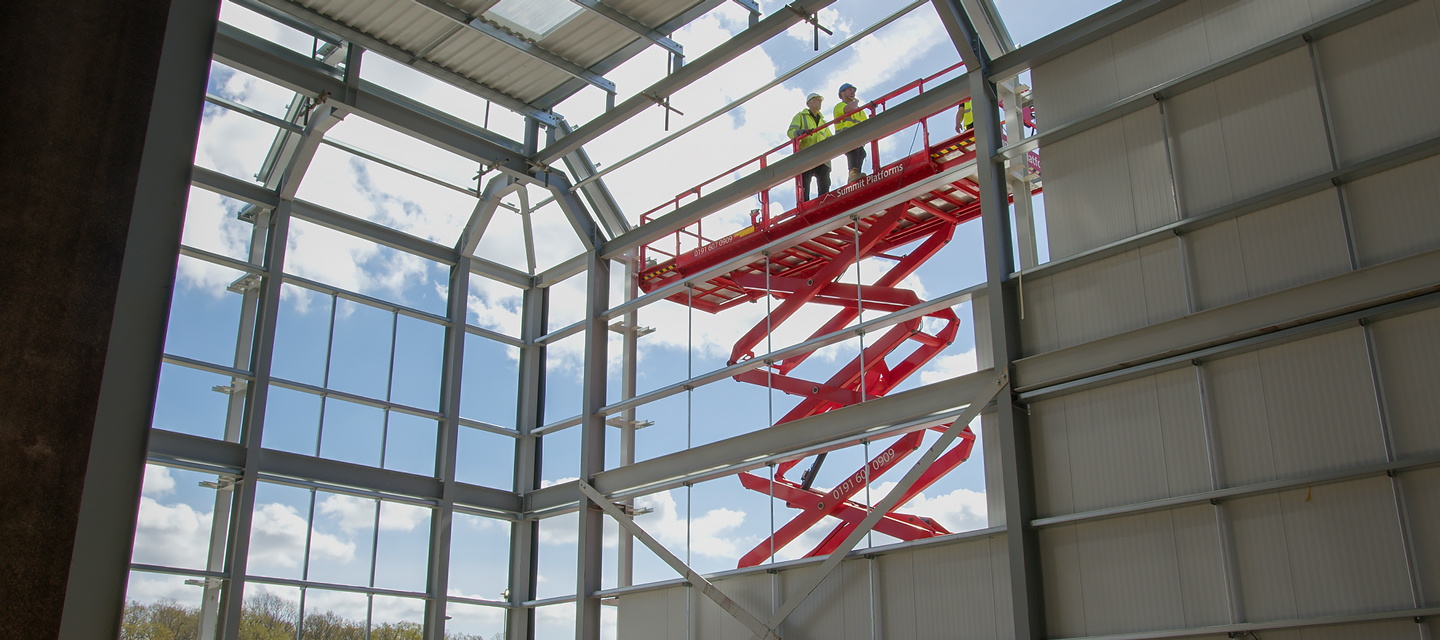
The Benefits and Drawbacks of Steel Frame Structures for Office Refurbishment
Office refurbishment often involves expanding or enhancing the space available. One popular way to achieve this is by incorporating a steel-frame building, either as an extension to the current structure or as a separate building if space allows. While traditional brick-built constructions are still widely used, steel-frame buildings are becoming an increasingly popular choice for office refurbishments.
If you’re considering steel-frame buildings for your office refurbishment, read on to learn more about their advantages and disadvantages. At BM Steels, we’re here to guide you through the decision-making process. Reach out to us for a free site visit, advice, and an estimate for your project.
Steel Frame Buildings in the UK: The Basics
Steel-frame buildings rely on a skeleton of steel columns and beams to bear the building’s load, in contrast to load-bearing walls made of wood, concrete, or masonry. This steel skeleton forms the building’s core, providing outstanding strength, stability, and support. The frames are often enclosed with single-skin panels to protect the structure while maintaining its integrity.
Steel’s capacity to span long distances without needing internal support columns makes it ideal for creating open-plan office spaces. Additionally, since steel components are usually prefabricated and assembled on-site, the construction process is quick, minimising disruption to your operations.
Key Components of Steel Frame Buildings
- Steel columns: Vertical elements that transfer the building’s load to the foundation.
- Steel beams: Horizontal beams that support the roof and floors by distributing loads to the columns.
- Connections: These joints or welds bind the columns and beams, ensuring the structure works as a single unit. Connections are often bolted or welded for a sturdy, reliable structure that can support roofs, walls, and floors.
Types of Steel Frame Structures
Steel frames can be designed in various shapes, from simple rectangular layouts to complex, large open spans. Here are some common types:
- Conventional steel frame: Typically used in skyscrapers and large industrial or commercial structures, this framework uses traditional I-beams and steel members.
- Light gauge steel framing: Made from thinner steel members, it mimics the look of wooden studs and is a popular option for smaller commercial projects.
- Portal frame construction: A popular choice for warehouses, factories, and office buildings, this method uses rigid steel columns and beams, offering large open interiors.
Steel Frame Building Kits vs. Turnkey Steel Building Solutions
When exploring steel buildings for your project, you may encounter two main options: steel building kits and turnkey solutions. Each has its unique set of benefits and considerations in terms of construction method, ease, and labor.
Understanding Steel Frame Building Kits
Pre-engineered steel-frame building kits come with all necessary materials, including the steel framework, cladding, insulation, and more. While cost-effective, these kits require the buyer to manage the construction process, which can include obtaining permits and overseeing inspections. For those lacking construction experience, mistakes can cause delays and add expenses.
Turnkey Steel Building Solutions
Turnkey solutions, like those provided by BM Steels, offer an all-inclusive service where experts handle the entire process—from design to construction—ensuring a building that’s ready for immediate use. Though turnkey solutions may have a higher initial cost than steel kits, they eliminate the unpredictability of hiring contractors, delays, and potential mistakes in project management.
Planning Permission for Steel Buildings
Before proceeding with a steel-frame office refurbishment, it’s important to determine whether you need planning permission. At BM Steels, we offer assistance with obtaining the necessary permissions, whether you choose a steel-frame building kit or our bespoke turnkey services.
Advantages and Disadvantages of Steel Frame Construction
Steel-frame buildings come with several advantages, but like all construction methods, there are some drawbacks. Here’s an overview of both.
Advantages
- Strength and Durability: Steel is incredibly strong, requiring minimal maintenance compared to other materials, such as wood, that may deteriorate over time.
- Design Flexibility: Steel frames enable large open spaces without internal load-bearing walls, ideal for creating open-plan offices.
- Quick Construction: Prefabricated components reduce overall construction time and minimise disruption.
- Weather Resistance: Steel is resistant to moisture, warping, and weather damage, making it ideal for fluctuating climates.
- Pest-Free: Unlike wood, steel doesn’t attract pests like termites, offering a long-lasting solution.
- Fire Resistance: Steel doesn’t ignite or weaken easily in high temperatures, lowering fire-related risks.
- Eco-Friendly: Steel is 100% recyclable, reducing construction waste and supporting sustainability efforts.
- Energy Efficiency: With proper design, steel-frame buildings can be energy-efficient, reducing long-term heating and cooling costs.
Disadvantages
- Higher Initial Costs: Steel-frame buildings tend to be more expensive than wood-frame structures due to the cost of materials and the need for specialised labour.
- Corrosion Risk: If not properly maintained, steel can be vulnerable to rust. Protective coatings and routine maintenance are necessary to ensure longevity.
- Insulation Requirements: Steel can conduct heat, so quality insulation is essential to prevent energy loss.
- Reduced On-Site Flexibility: Steel construction is precise, and any changes during the build require specialised labour, which can be costly and time-consuming.
- Additional Fireproofing: In some cases, steel structures may need an extra fireproof coating for added protection.
Final Thoughts on Steel Frame Office Refurbishment
Using a steel frame for your office refurbishment offers numerous benefits, including strength, design flexibility, and eco-friendliness. For companies prioritising sustainability, steel is an ideal choice. In the long run, steel-frame buildings offer significant savings on energy costs and repairs, making them a smart investment for any office project.
At BM Steels, we specialise in providing high-quality steel-frame buildings for office refurbishments. Whether you’re looking for a steel building kit or a turnkey solution, our team is here to help.